This page is no substitute for practical experience gained alongside a competent skipper. It helps you acquire or brush up technical knowledge and broaden your approach to harbour manoeuvres. To practise them, there is the harbour manoeuvres course.
A little vocabulary
- The bow: the front of the boat. The stern: the back of the boat.
- The fairlead: a deck fitting that guides a line, generally so that it does not bear on the pulpit or the stanchions.
- A bow line runs from the bow to a point ashore further forward; a stern line runs from the stern to a point further aft.
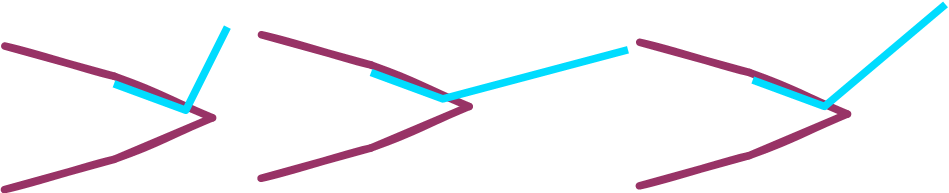
- The angle of a line determines whether it works mainly lengthwise or sideways. The flatter the angle between the line and the boat (close to 0°), the more it works lengthwise: a bow line then stops the boat moving astern. The more open the angle (close to 90°), the more it works sideways: it stops the boat moving away from the pontoon.
- A spring works in the opposite direction to a bow or stern line. The aft spring runs from the stern to a point on the pontoon further forward: it generally stops the boat moving astern. The forward spring runs from the bow to a point on the pontoon further aft: it stops the boat moving ahead. Going ahead on the forward spring creates a pivot point at the bow, which swings the stern away from the pontoon.
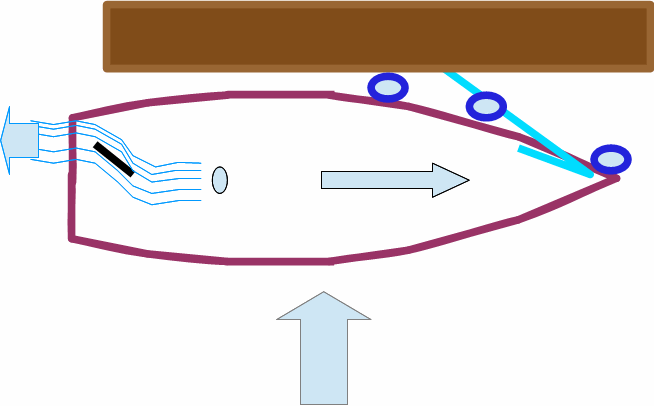
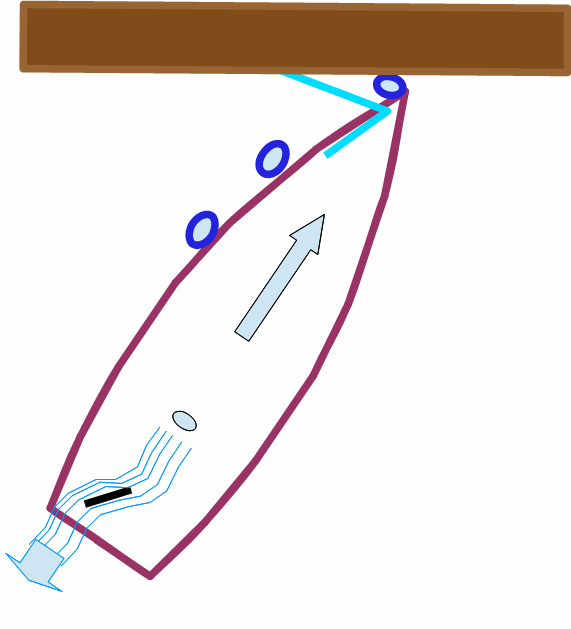
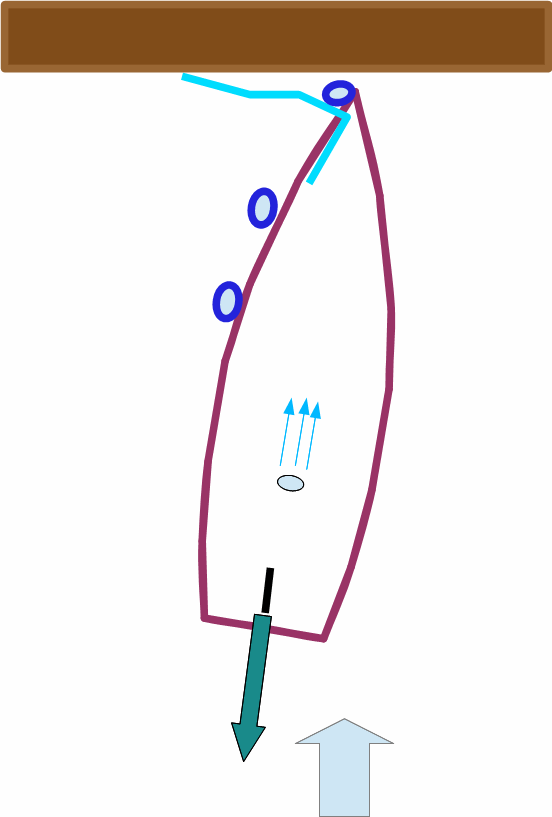
The midships spring
Much liked by sailors with a small crew, it runs from the middle of the boat, through the midships fairlead (or from the cleat on the toe rail, if there is one), and holds the boat with a single line. To leave, you run it out and back between the boat and the pontoon and bring it to a winch: it is then easy to adjust or let go. Held at a point in her middle, the boat remains fully manoeuvrable: the midships spring is a better bow thruster!
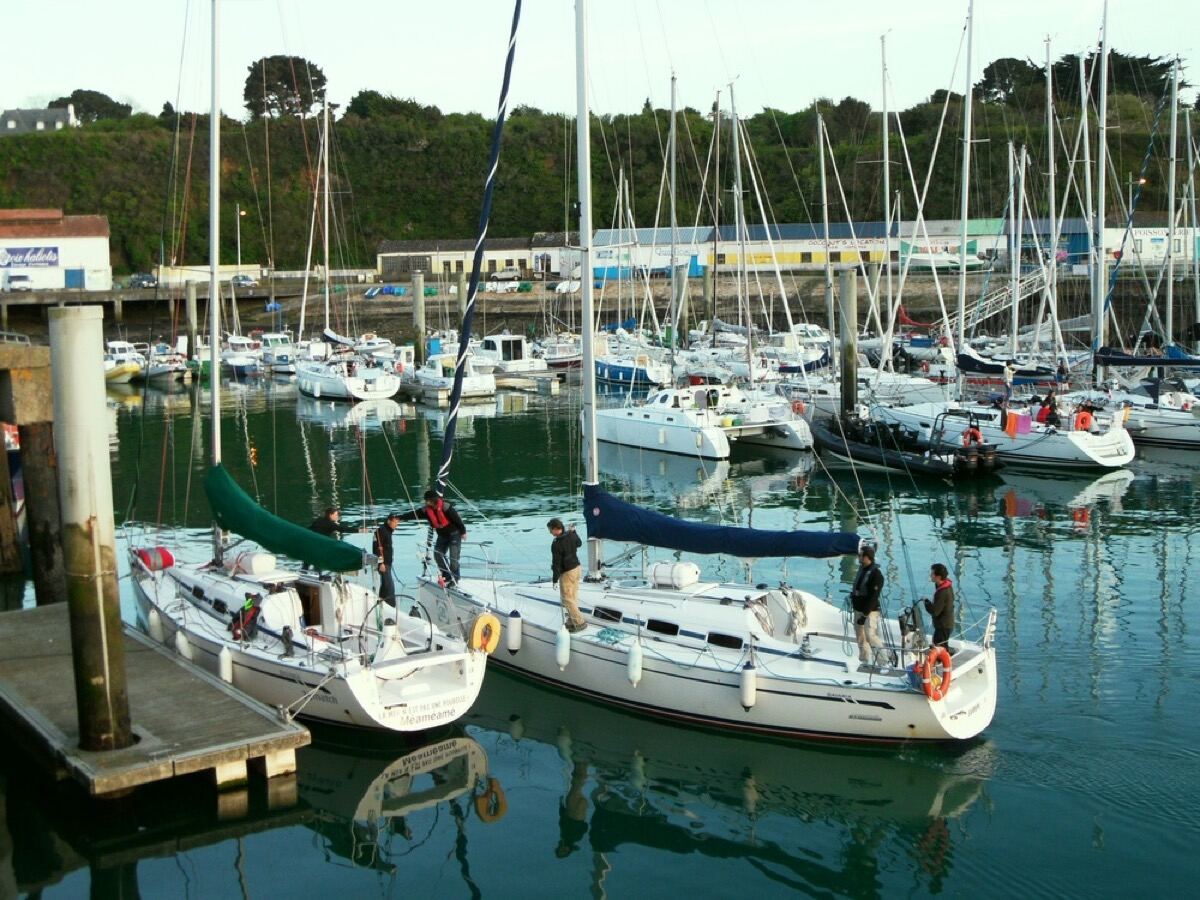
Helping a boat coming alongside
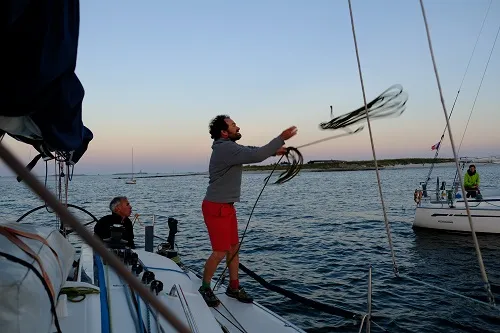
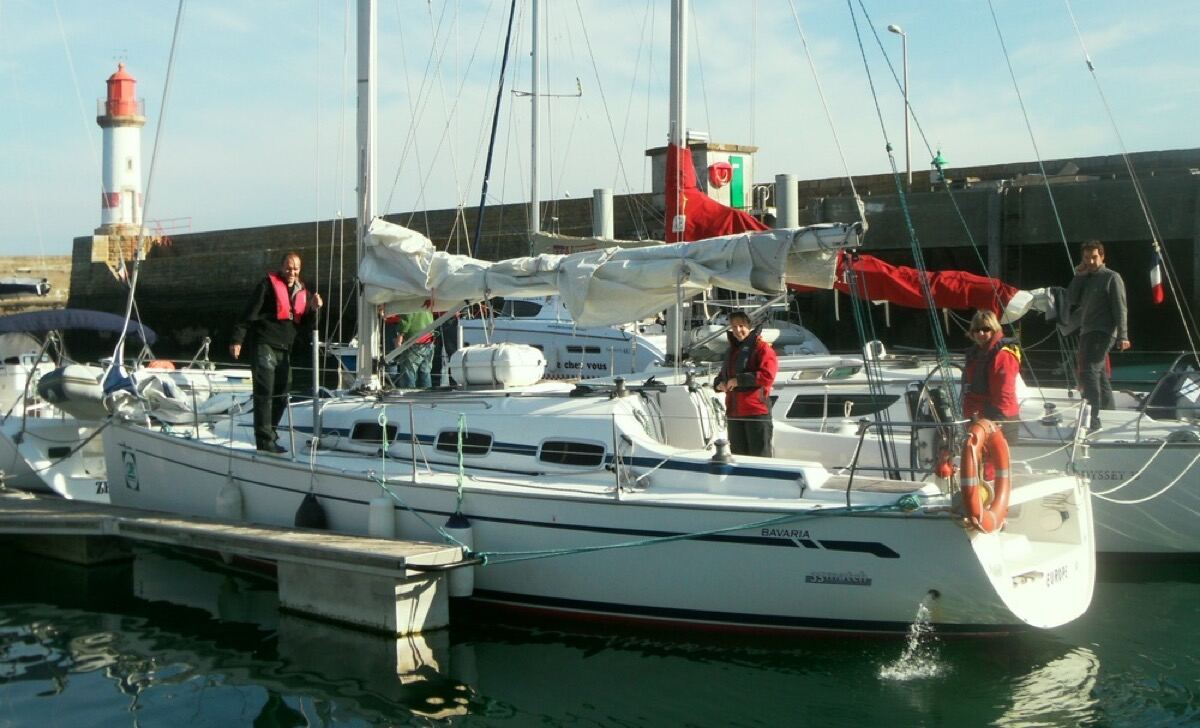
In a photo of an almost perfect manoeuvre coming alongside another boat, the arriving boat has set her fenders well (right height, good coverage), all the lines are ready and in hand, and the speed, approach angle and spacing are right. Well done Roland, on the helm of Europe! One crew member stands at the shrouds, ready to step across — that is exactly where they should be. But it is another crew member who holds the line and passes it to the other boat. Is that a good idea? No.
- It is up to the helmsman to carry the manoeuvre through to the end; the lines are only there to hold the boat. There is therefore no rush to pass the line: it could have stayed in the hand of the crew member at the shrouds.
- A crew member passing the line without being able to hold on risks losing their balance and falling in between the boats.
In harbours you often see people rushing to pass lines. Wanting to act, or to help, at the wrong moment sometimes leads to an incident: the manoeuvre is blocked by a line made fast too early. Some boats refuse any help for that very reason.
The lesson: when you want to help a boat come alongside, simply make yourself available to her skipper and avoid taking the initiative — unless it is clearly a matter of avoiding a collision, the helmsman is not in control of the manoeuvre, or the boat can no longer manoeuvre because of a technical problem.
Going astern
Manoeuvres astern are practised on the course, right up to reversing into a finger berth.
Berthing on the leeward side of a pontoon, short-handed
The wind blows us off the pontoon. The manoeuvre is carried out by a helmsman and one crew member, with little room ahead and astern: real conditions.
- The helmsman first concentrates on the approach angle and speed, which depend on the strength and direction of the wind.
- He goes into neutral then, before the final phase, into astern — simply engaged, at tickover.
- He concentrates on placing the boat: not touching the pontoon, and arriving close enough and with enough way on that the wind does not push her off.
- Once the boat is in place, he stops her with a burst astern; looking sideways, he sees exactly when she stops. Meanwhile the crew member has stepped off and taken a round turn round a cleat.
- The helmsman holds the boat by going ahead, helm to port. He can then pass the bow and stern lines to the crew member to finish mooring.
Variant: prepare an eye that you drop over the cleat without stepping off the boat, then take up the tension on a winch. This is not possible when there is no real cleat, only a small loop.
Leaving the windward side of a pontoon on the midships spring
The wind pushes us onto the pontoon. There is a boat ahead, and astern the pontoon would get in the way of leaving on the forward spring (we would have to go astern); as for the aft spring, it would not work because the wind is too much on the beam. So we leave on the midships spring: simply go ahead, with as much throttle as the wind requires, and steer the boat with the helm. Once we have enough room and a little speed, we let the midships spring go and take it back on board. Gaëlle filmed the manoeuvre.
Leaving from alongside another boat, on the aft spring
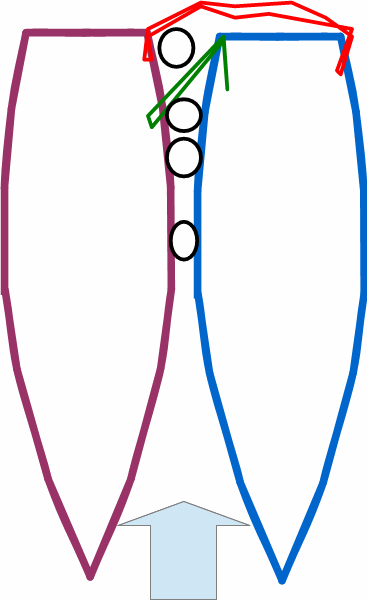
The wind, 45° on the port bow, pushes us onto the boat alongside: we need a spring to get away, and the aft spring is the one to use. Yet a boat pivots far less well on the aft spring than on the forward spring. Why?
- Going astern, the rudder gets no flow from the propeller: it is therefore almost ineffective.
- On the forward spring, the V-shaped bow makes it easier to pivot.
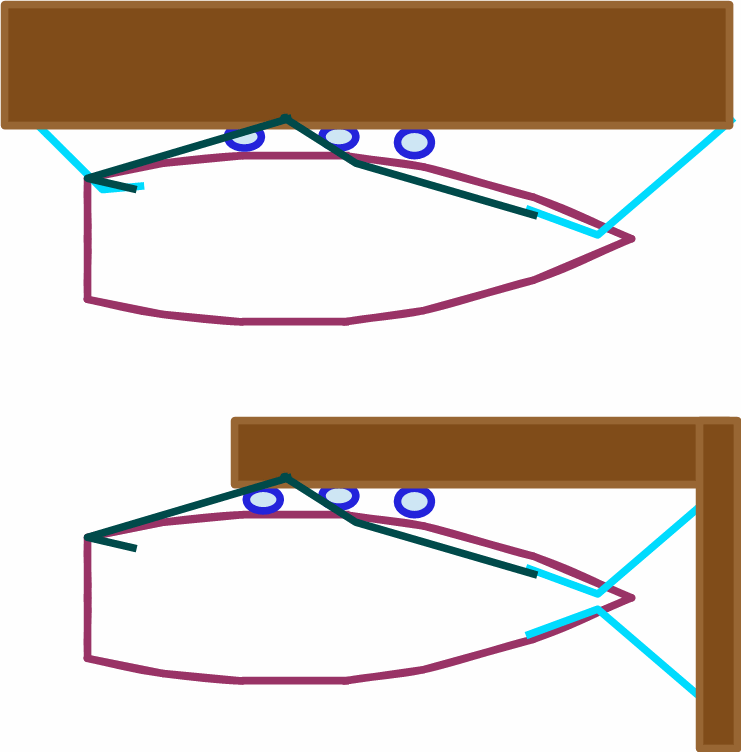
To get round this, we use the space astern of the other boat, and the corner of her stern, as a pivot point. The manoeuvre is a little delicate because of the stern pulpits: you need to place your fender carefully and work out the length of the spring so that the pulpits do not touch. Tom does it perfectly. Once the bow is past the eye of the wind, the manoeuvre is won; as the wind can shift about in a harbour, we wait until we are really sure before going ahead.
Leaving the leeward side of a pontoon in a fresh breeze
Fresh breeze, little room, other boats close by: we simply use the wind and the boat’s natural tendency to pivot bow downwind.
- The bow line is let go; the stern line is held at first.
- The bow swings away. To keep the stern off the pontoon, the helmsman goes ahead very gently, giving the bow time to swing out and point towards the exit.
- The stern line is let go. The bow keeps falling off with the wind; to speed up the turn, put the helm hard over to port and give the engine a good burst (in the situation filmed, it was not needed).
A 180° turn when leaving from alongside
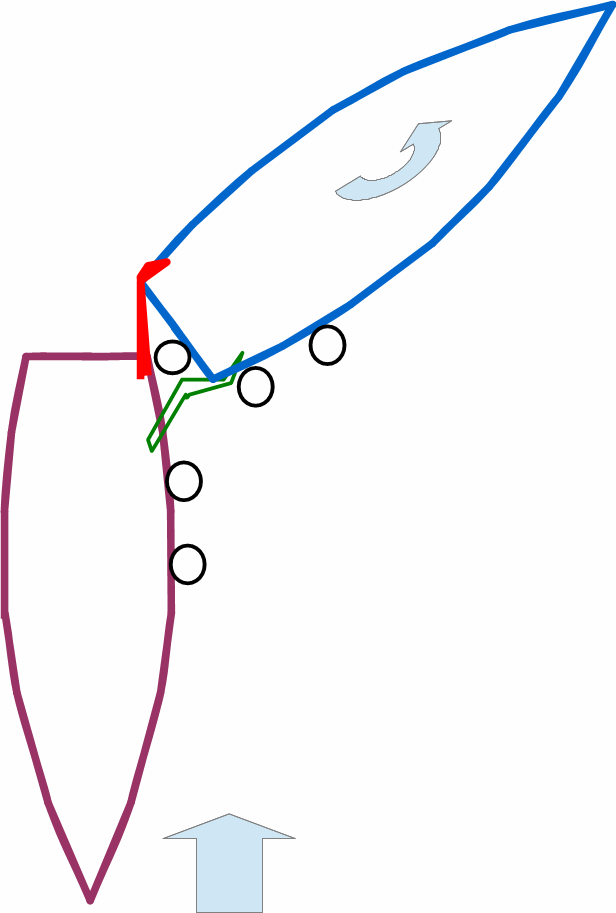
In L’Aber Wrac’h the boat lies alongside, bow to the wind, and we want to leave the other way in a fresh breeze, with very little room ahead: she has to turn through 180°. The manoeuvre is still simple, because the wind turns the boat for us.
A key moment in the manoeuvre: at a precise angle in the turn, shown in the video, the first aft spring has to be let go so that the second one, rigged before leaving, takes over and completes the turn. The sterns of the two boats are bound to touch: a roving fender at the stern is essential. The video has a commentary.
Slipping a mooring buoy under mainsail
This manoeuvre works every time, if it is done properly. The key factors:
- Make sure there is room on the side you want to leave towards.
- Hoist the mainsail and ease the sheet right out: the tackle must be fully open (the easiest way is to push the boom out).
- Prepare your mooring line doubled, on the windward side; both ends are held in the hand.
- Wait for the boat to swing the right way: the bow crosses the eye of the wind back and forth.
- When the foredeck crew is well to windward, they pull the doubled line hard towards the stern and let one end go once they reach the stern.
- The helmsman bears away to open the angle to the wind as far as possible (beam reach or broad reach if possible), mainsail eased right out.
The speed gained this way and the very open point of sail let the rudder and keel work properly: the boat becomes fully manoeuvrable.
Leaving single-handed on the midships spring, in light airs
Light wind blowing the boat off the finger berth.
- The fenders have been set on the leeward side, high up, to protect the boat if she drifts.
- The midships spring, working slightly as a spring, has been put under tension by going ahead. To let it go easily, it is doubled and made fast on the cockpit winch.
- The helm is turned slightly to starboard to keep the boat alongside the pontoon: she is held by a single line and the engine in gear.
- When the skipper is ready, he puts the lever in neutral for 2 to 3 seconds, as recommended, then into astern.
- As the boat starts to move astern, the skipper lets the midships spring go and brings it on board.