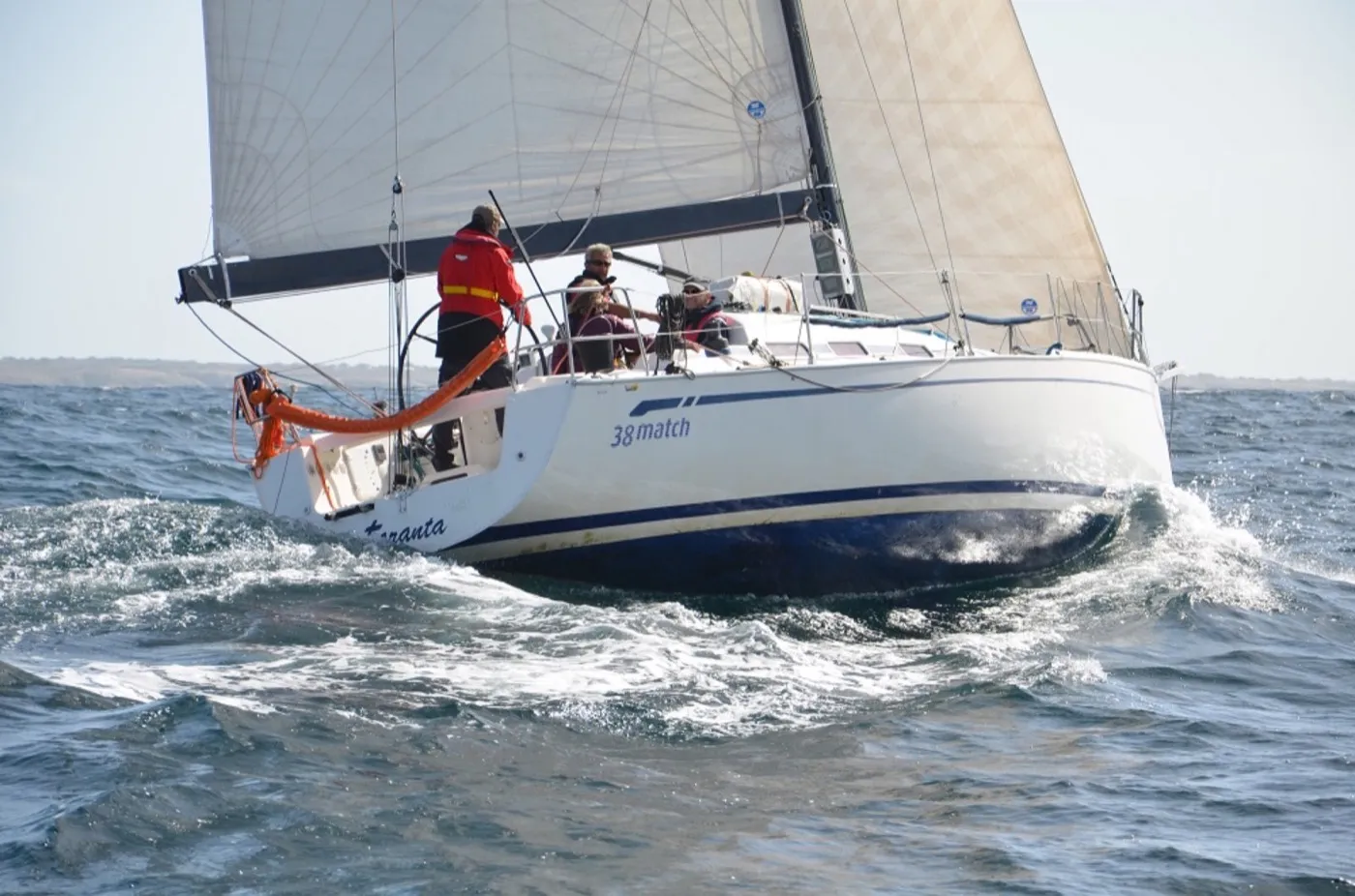
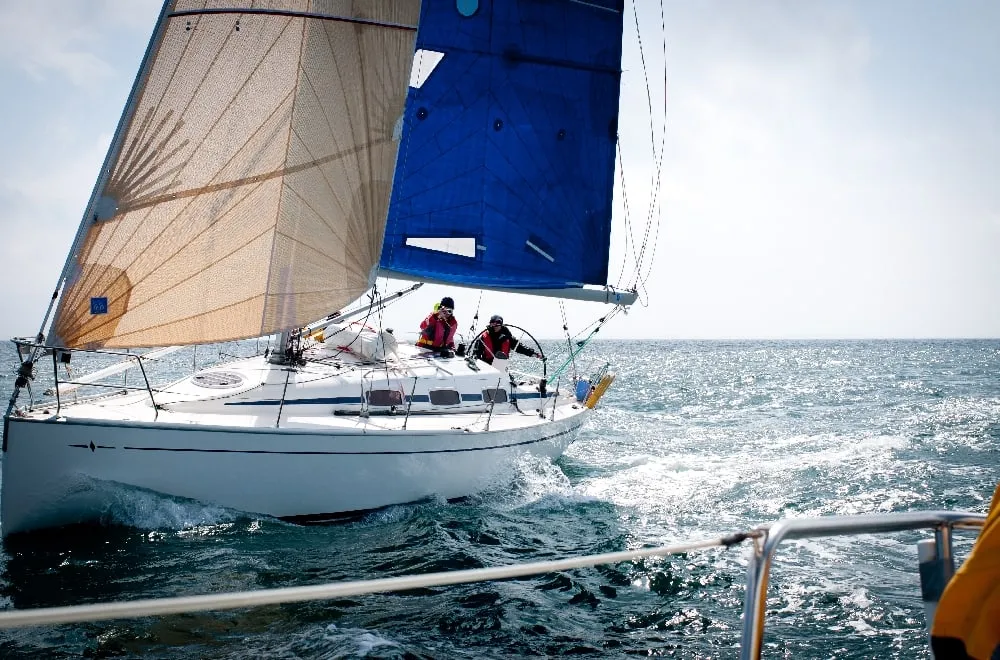
On board, the crew is small — four or five trainees at most, plus the professional skipper — on a cruiser-racer of 38 to 42 feet. We look for a balance between learning and relaxing: enjoying the feel of sailing, the riches of the sea and the beauty of the sailing areas. How much time is spent at sea sailing or practising depends on the crew’s wishes and energy.
Daily rhythm & watches
When coastal cruising, the rhythm follows the daylight: you set off in the morning, sail or practise, and reach a harbour or an anchorage in the late afternoon. The choice is made together — harbour or anchorage: a harbour offers facilities and local life, an anchorage the pleasure of falling asleep and waking up in a place that is often magical.
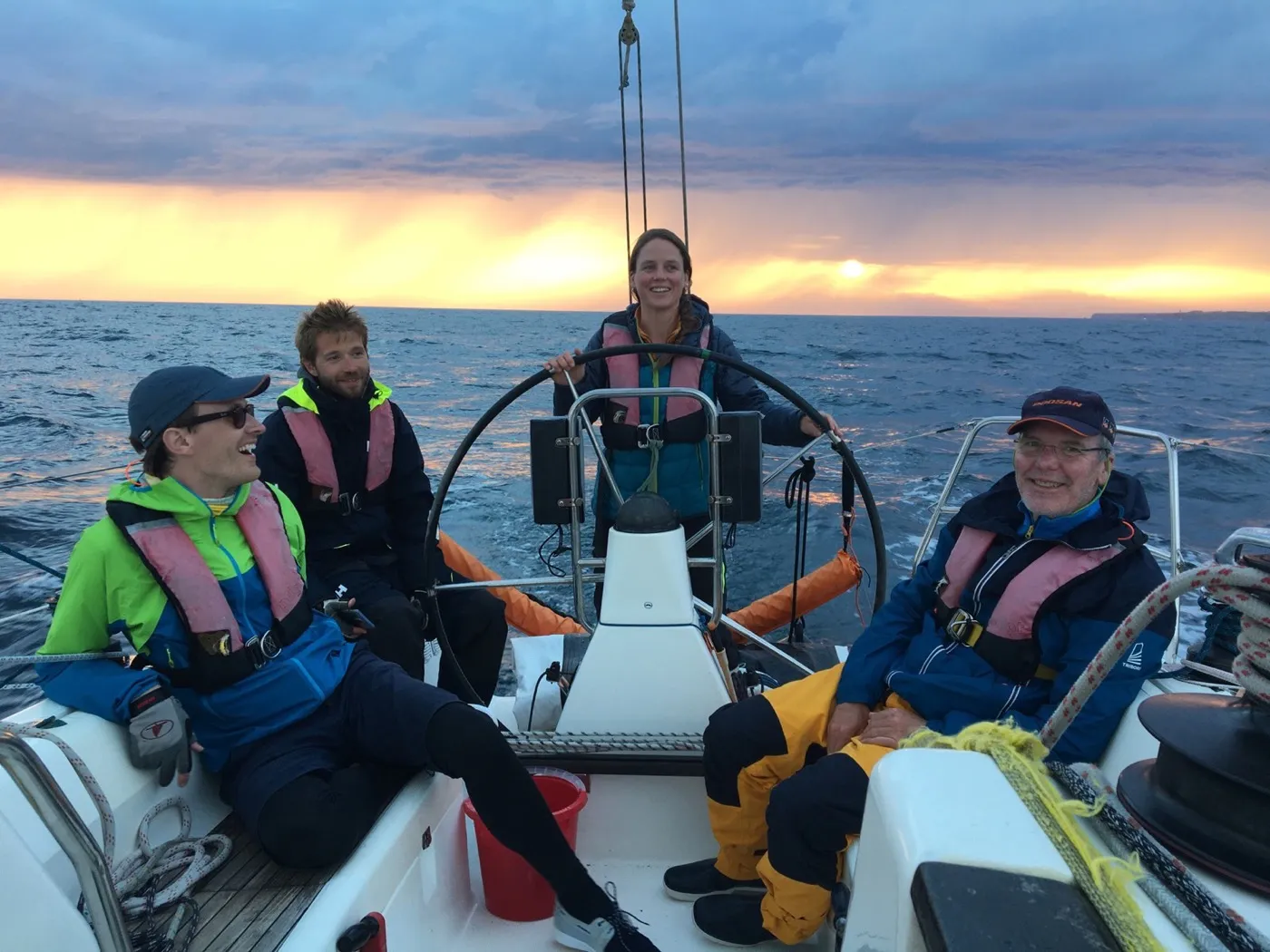
In Brittany, and especially in North Brittany, the rhythm of the day also adapts to the tidal streams: you leave “with the stream” rather than against it, even if that means an early start. On longer passages (offshore, at night), a system of watches is set up: everyone keeps watch in turn while the others rest, so that the boat is always sailed by people who are rested and alert.
Berths & saloon
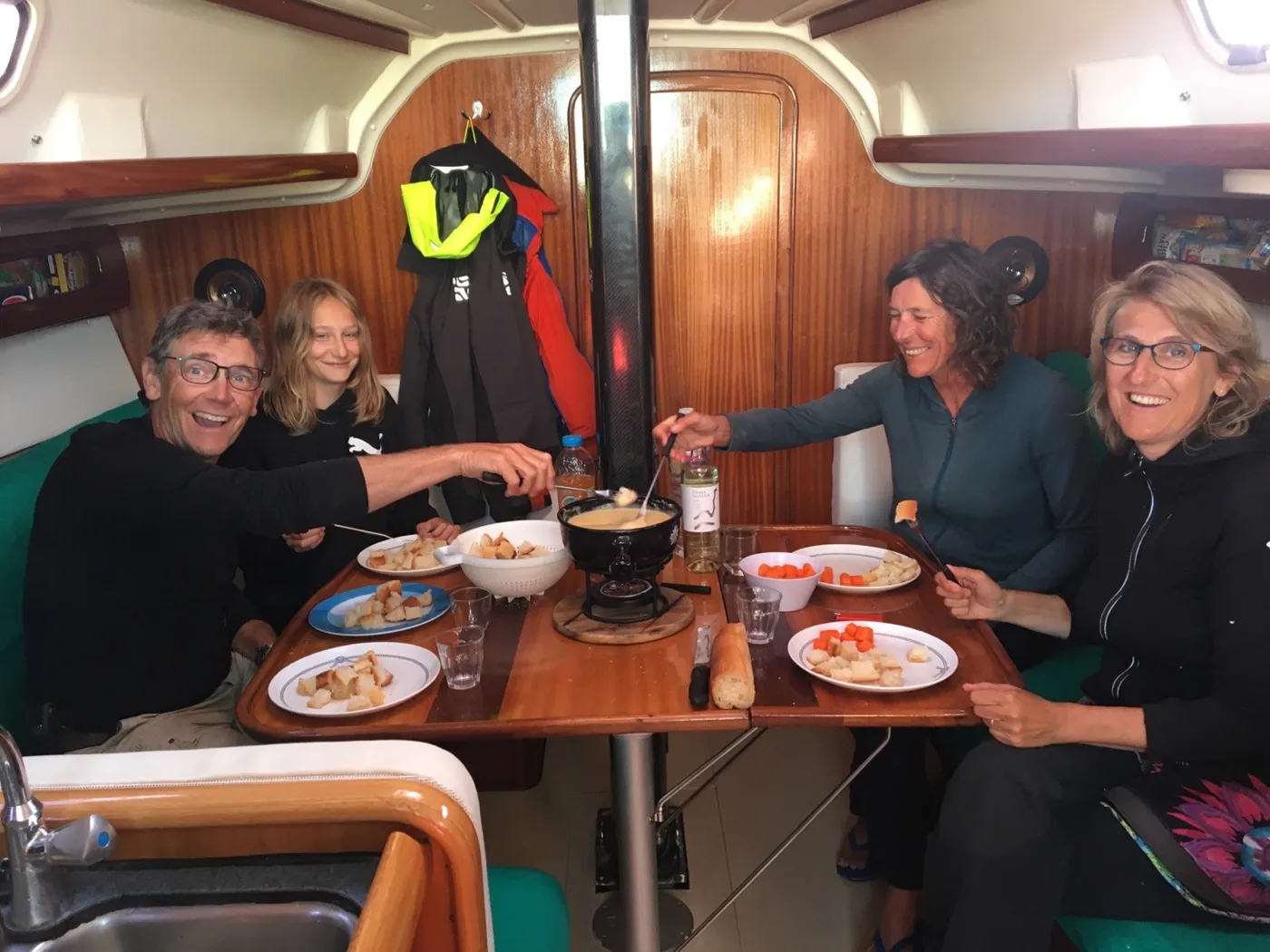
The saloon is the central living space: table, benches, chart table. It is where you eat, plan the passage and get together. The berths are spread between the cabins and the saloon; everyone has a limited personal space, hence the importance of travelling light with a soft bag (no hard suitcase, which cannot be stowed). Under way, everything is stowed: when sailing, nothing should be left lying around.
Meals & provisioning
Provisioning (shopping for the boat) is done at the start of the course and topped up at markets along the way. The rhythm of meals adapts to the sailing:
- Lunch, usually at sea: a simple, mostly cold meal (salads rather than a sandwich), sometimes a hot soup.
- Dinner, in harbour or at anchor: we take the time to prepare a good hot meal.
- We often try our luck fishing with a line (mackerel, pollack, sea bass, sea bream) for the incomparable pleasure of eating your own fresh fish on board.
- Regional specialities are welcome; there is usually a crêpe evening (often on Thursday).
Daily chores — cooking, washing up, cleaning, tidying — are shared out naturally among everyone: they are also moments of good company.
Water & power
Fresh water and electricity are limited resources. Water from the tanks is used first for drinking and cooking: you save it when washing up and washing yourself, and fill up when in harbour. Electricity (batteries) powers the electronics, the lighting and the fridge; avoid drawing on it needlessly. A simple rule that pays off: don’t leave the water running, don’t switch on for nothing. These habits are part of the boat’s self-sufficiency.
Hygiene & the marine toilet
The toilet on board is called the marine toilet (or “heads”). It does not work like a toilet at home: you operate a pump to flush it, following precise instructions posted on board, and you put nothing in it other than what it is meant for — otherwise you block the system, the most unpleasant breakdown on board. The skipper explains how it works at the start of the course. For washing, you wash in sea water and rinse sparingly with fresh water; stops in harbour allow a proper shower.
Safety
Safety is non-negotiable and part of the learning. The basic rules:
- Lifejacket worn as soon as you are on deck. The situations in which we don’t wear one are very exceptional (under engine, in hot weather, with the sea at a pleasant temperature). Why? A man overboard is, by definition, an accident — something nobody can foresee.
- Harness and jackstay to stay clipped on to the boat in heavy weather or at night: “one hand for yourself, one hand for the boat”.
- Say so before moving about the deck, always keep a handhold, and move along the right side (the windward side).
- You learn where the lifejackets, lifebuoy, liferaft, fire extinguishers and VHF are, and you learn the man-overboard manoeuvre.
- Alcohol on board must be kept limited and sensible.
- Don’t go against the skipper’s instructions: this is fundamental to the safety of the boat, and so of everyone on board. A skipper who is undermined may no longer do the job properly; if there is serious tension with a crew member, putting that person ashore may become necessary. It has never happened yet, though there have been a very few borderline cases (2 or 3 in 20 years, from memory).
Both recoveries are analysed step by step on the Man overboard and safety page.
Atmosphere & crew life
Memories of life on board often stay as vivid as the feel of the helm, the technical learning and the beauty of the scenery. Crew life is built from shared moments: a sunset at anchor, a fish caught and grilled in the evening, a game of cards, music. There are in fact songbooks, a guitar and a violin on board — and any instrument of reasonable size is welcome. You come aboard as strangers and go ashore as a band of friends.
In practice
To prepare your bag, ask your beginner's questions or get ready for your first night on board, the simplest thing is to talk directly to the skipper. Loïck Feat — +33 (0)6 79 13 34 08 — bretagne.atlantic.yachting@gmail.com.
In pictures